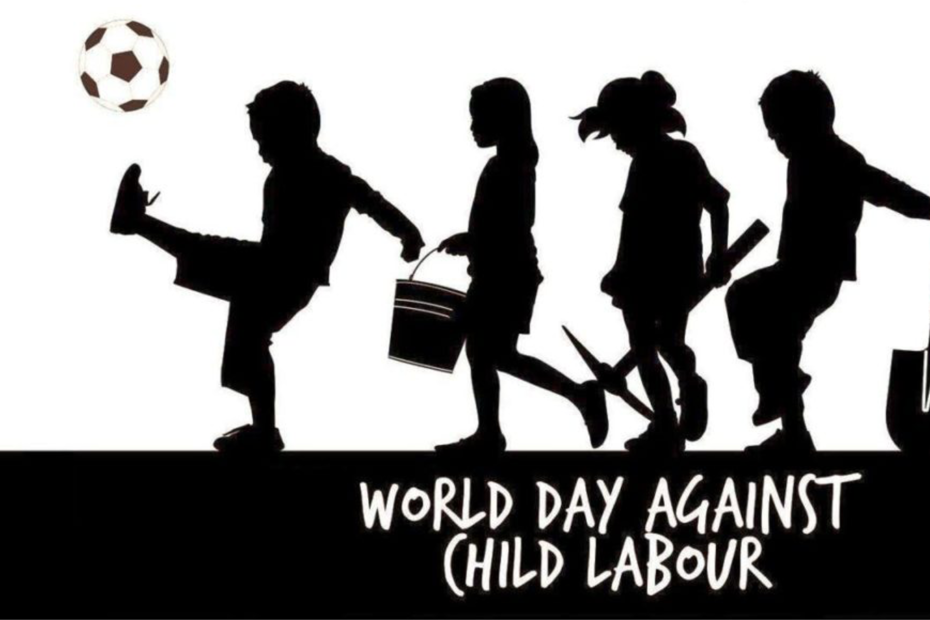
Every year on June 12th, the world observes World Day against Child Labour, a day to raise awareness and take action to end the exploitation of millions of children who work under hazardous and harmful conditions. The day was launched by the International Labour Organization (ILO) in 2002 and is part of the global movement to achieve the Sustainable Development Goal 8.7 of ending child labour in all its forms by 2025.
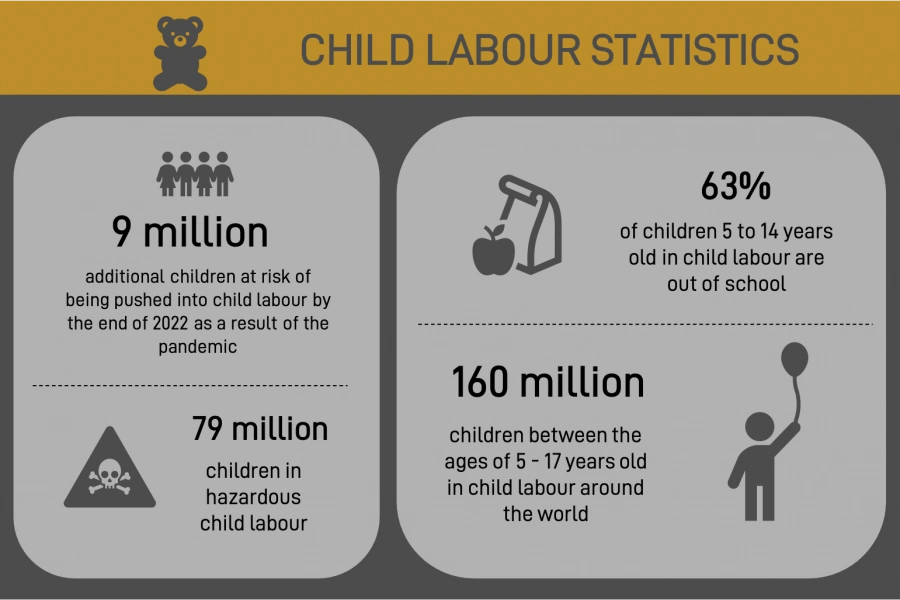
Child labour affects 160 million children worldwide. It refers to work that interferes with the child’s schooling and all forms of work that is mentally, physically, socially, or morally dangerous and harmful to children. Around 70 % of child labour, occurs within the agricultural sector. Other common sectors include; domestic work, drug manufacturing and distribution of drugs, sexual exploitation and prostitution and the industrial sector, such as manufacturing of goods. A staggering 73 million children work in hazardous working environments.
Child labour is a violation of human rights and a barrier to education, health, and development. It is driven by poverty, lack of social protection, conflicts, disasters, and other factors that expose children and their families to vulnerability and deprivation. Child labour deprives children of their childhood, their potential, and their dignity.
Africa is the continent with the highest number of children in child labour with approximately 72 million children being affected. The Pacific and Asia rank second highest, with 62 million children in child labour, followed by the Americas at 11 million children affected by child labour.
Demand for investments and development
The most common sector for child labour is agriculture, which accounts for 70 per cent of total. Other sectors include domestic work, sexual exploitation and prostitution, drug manufacturing and distribution, and the industrial sector, such as manufacturing.
These children are often forced to work in slave-like conditions. Even though all child labour should be eliminated, the priority is to eliminate the worst forms where children are separated from their families, exposed to serious hazards, are in slavery or similar.
It is not difficult to understand that child labour puts children at risk of physical and mental harm. In order to end it, the ILO and UNICEF wants to, amongst other activities, see investments and development; in child protection systems, in infrastructure and in the agricultural sector, in social protection and universal child benefits as well as demand decent work conditions for adults – to help stop children being forced to work.
Please refer to https://endchildlabour2021.org to see what you can do to help.