The summer annual leave is approaching and with that we would like to give summer book tips on the FinCrime topic.
Title and author;
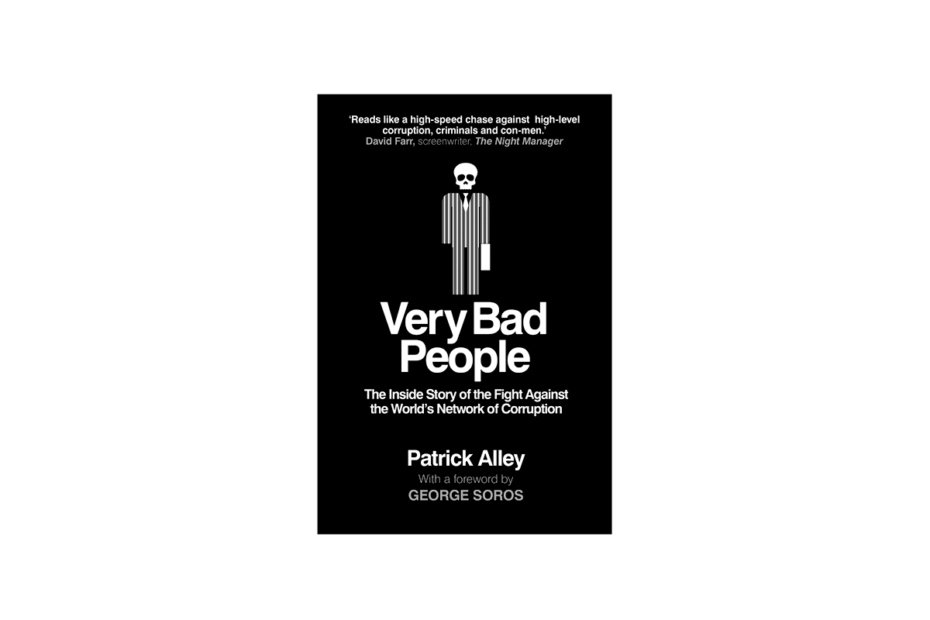
Very Bad People: The Inside Story of the Fight Against the World’s Network of Corruption
By Patrick Alley
About the book:
Thirty years ago, the investigating campaign organisation Global Witness was founded, to track and expose the links between environmental crime, human rights abuses, conflict and the world of grand corruption. ‘Very Bad People’ recounts their story. From Cambodia to Angola and from Honduras to Liberia, Global Witness has followed the money to expose how the looting of natural resources (timber, diamonds, iron ore, oil…) is intimately related to and sustains conflicts in some of the poorest countries on Earth. It uncovers who the “very bad people” are and how they take the often-obscene profits from corrupt and destructive deals. This shadow network operates at the interplay between the regulated and unregulated global economy and includes political and military elites, international corporations, lawyers, bankers and organized crime groups. The book also stresses the terrible impact of these deals on the many victims and the great risks that investigative journalists and environmental activists take in order to bring attention to them.
Review:
The high-profile global corruption cases discussed in this book are very depressing. This is even more true upon reading one of its conclusions that over the past 30 years things haven’t improved much. However, this book is still a great summer read. First, and quite important for summer literature: it reads like a thriller and has many juicy and true anecdotes. Second, it provides insight in the complexity of corrupt networks and the interwovenness of the legal and illegal worlds. Finally, it is very inspiring to read how the important and fearless investigations Global Witness has carried out came into being and how the actions of an initially small organization have led to real and important change on a global scale.
***
Title and author;
Billion Dollar Whale
by: Tom Wright and Bradley Hope
About the book:
The book is about the 1MDB fraud that ended up costing the Malaysian state close to a billion US Dollars, but rather than your run of the mill political corruption this scandal also had a profound impact on popular culture with the fraudsters choosing to spend some of the proceeds on music and movie production. We also get to see how the spending habits of the fraudsters got them close with people ranging from powerful politicians in the Middle East to some of Hollywood’s most famous actors.
Review:
The Billon Dollar Whale reads more like something you would except to see on Netflix, like the Tinder Swindler, Inventing Anna, or the Wolf of Wall Street. It is packed with references to concurrent events in popular culture, but that does not make it necessarily less interesting for a keen financial crime professional. It shows that criminals and criminal proceeds can be injected into the legal economy and that criminals can enjoy the company of famous and non-criminal person given that they use their money in the right way.
***
Title and author;
Kleptopia: How Dirty Money is Conquering the World
by: Tom Burgis
About the book:
In Kleptopia, Burgis has chosen a style close to a fictional thriller when describing the worldwide reach and consequences of financial crime with a special focus on the case of Eurasian Natural Resources Corporation (ENRC). The book shows how corruption and crime in far-flung destinations such as Kazakhstan and Zimbabwe are intertwined with the financial markets of Western Europe.
Review:
The book reads more like fiction, and it has a suspense to it that can draw in a wider group of readers than just financial crime experts. With that said, as a nerdy financial crime professional, I think that the book has sometimes shed some detail on the structures involved and has instead focused more on the individuals which of course drives the story.
***
Title and author
Money Men ‘A Hot Startup, A Billion Dollar Fraud, A Fight for the Truth’
By: Dan McCrum
About the book:
After seeing WireCard’s rapid rise and growth in a space of a few short years, overtaking industry giants like Deutsche Bank and Commerzbank. It prompted Dan McCrum a journalist to investigate what he perceived as ‘too good to be true’.
As Dan McCrum investigated further, what he discovered was mindblowing and ultimately it was his discovery which brought the darling fintech crashing down. From fake bank accounts to fake offices and fake deaths. It produces an astonishing view of the WireCard fraud.
Review:
Undoubtedly bad actors, shoddy behaviours and poor governance all contributed to the WireCard scandal, Dan McCrum takes you through how a tip led him to investigate what everybody perceived as the best thing since sliced bread!
From cover-ups to threats – it’s crazy that the lengths that key personal at WireCard, their auditors and the authorities went to try and cover up the grave mishappenings and fraudlent actitivies. It almost makes you question that if they were successful, when is a company perceived as too big to fail.
We have all seen the effects the WireCard scandal have had on the tech market. From job losses to bankruptcy for some – whilst over valuation, inadequate processes and governance are central to the cause. I believe what Dan McCrum uncovered at WireCard does also add to the degree of caution that we are starting to now see across the tech market.
A blockbuster for Hollywood to bring to the big screen!
***
Title and author;
My Italians, True Stories of Crime and Courage
by Roberto Saviano
About the book:
The key argument in My Italians is that the Italian mafia is not only an issue of the South but that criminal families have permeated the whole country. Aside drug trafficking and other crimes, they have taken control of (parts of) the food distribution sector, the cement industry, waste management, telecom and more. Stories of crime are interwoven with stories of courage on how society can resist being dominated by the mafia and how many courageous Italians did and continue to do.
Review:
Definitely a good read. This book explains in detail how the Italian mafia operates and how legal and illegal worlds connect. It has it all: corruption, fraud, drugs, criminal infiltration of the state… While the book has been published in 2016 it still feels very relevant. The stories of resistance to the mafia are really uplifting and inspirational. The style is personal and it’s quite short (119 p.) so an ideal to read for an (Italian) beach.
***
Title and author;
Taking Down Backpage – Fighting The World’s Largest Sex Trafficker
by Maggy Krell
About the book:
The book details the author’s experience in conceiving, building and leading a landmark criminal prosecution against the CEO and founders of Backpage.com – a classifieds site described by authorities as “the world’s largest online brothel”. According to Krell, up until the site was shut down by US authorities in 2018, Backpage.com was “the commercial sex industry’s biggest beneficiary”, operational in 800 cities across the world and almost universally used by brothels and street traffickers in California to advertise and sell their victims. Virtually every sex trafficking case prosecuted by Krell’s office featured an online ad posted on Backpage.com, a pattern which Krell was ultimately unable to ignore. Having spoken with hundreds of victims, Krell and her team built a case against Backpage.com’s CEO and founders, alleging that the site facilitated sex trafficking of both adult and child victims as young as 12 – and that the defendants knew it – and that the site was reaping millions in profit from the illegal sex trade. Krell’s account follows the trajectory of the investigation and arrest of the defendants; explains the evolution of the prosecution’s case from ‘pimping’ to money laundering charges; and concludes with a sobering reminder that authorities’ success in taking down the site is not enough: the epidemic of human trafficking persists, and demands a broad, inclusive and multifaceted response.
Review:
Krell offers rare insight into the work of law enforcement in tackling sex trafficking at the corporate level, detailing in layman’s terms the legal and operational challenges that she and her team encountered in mounting what was then such a novel case against (very) well-resourced ‘white collar’ defendants. Krell’s writing style denotes her extensive experience as one of California’s former top prosecutors: her account proves a fast-paced, compelling read, while resisting any temptation towards dramatic effect or embellishment (which would be both unnecessary, given the subject matter, and potentially exploitative, given the very real victims described). Krell has since left her position as a prosecutor but the case she started remains ongoing, and her story is well worth a read for anyone interested in the intersection between sex trafficking, the criminal justice system and corporate accountability.